
From Research to Action: How UCPH Creates Impact
Research always comes first. But for Rebecca Adler-Nissen and CAISA (The National Centre for AI in Society), making knowledge about artificial intelligence relevant, accessible and actionable requires an active effort. It means ensuring that the people, organisations and decision-makers who can turn research into real-world impact beyond the walls of the university are able to understand and use it.
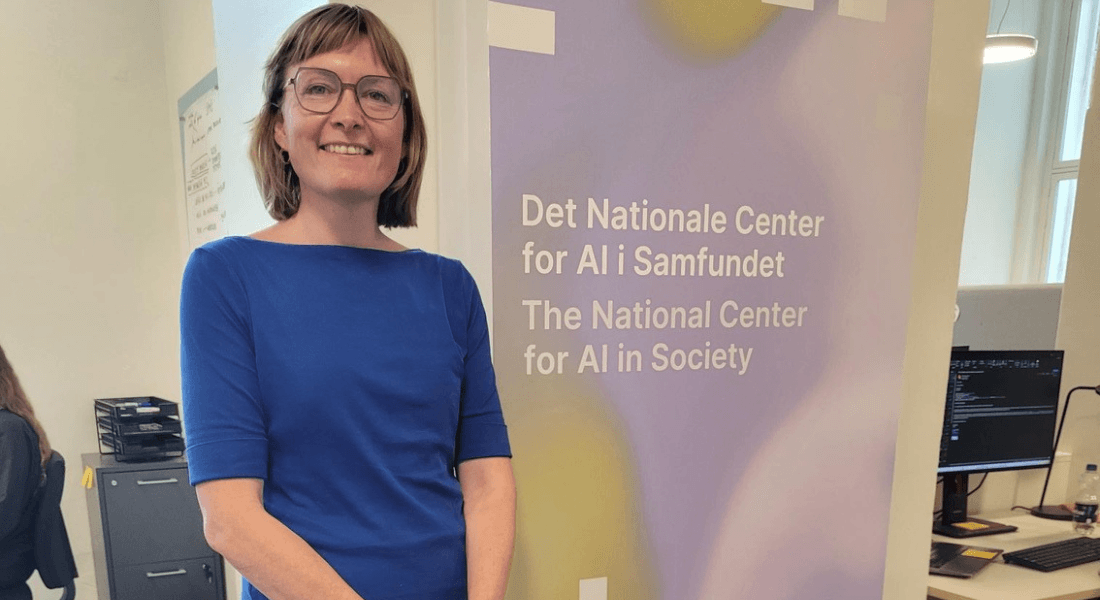
Innovation is about much more than patents. For Rebecca Adler-Nissen, Professor and Director of the transnational CAISA at the University of Copenhagen (UCPH), innovation is about making the latest research understandable and applicable both to those making decisions on behalf of society and to individual citizens.
This is why she attends the Danish Government’s AI summits at Marienborg when invited and invests time in engaging with civil servants, ministerial visits, NGOs, municipalities, and civil society organisations.
“We owe it to society to contribute. We are invited in because authorities, companies, and organisations know that we are independent, conduct high-quality research, and can provide insights, nuance, evidence, inspiration, and international perspectives.”
When innovation is discussed at universities, the focus is often on technologies, licences, and start-ups. However, a significant part of the University of Copenhagen’s contribution to society takes place through knowledge sharing and advisory services provided to ministries, government agencies, regions, municipalities, civil society actors, and others who use research-based knowledge to make better decisions and develop better solutions.
Research-Based Knowledge and Advice
CAISA conducts research into artificial intelligence and its implications for society. Based on this research, the centre provides knowledge and advice to authorities, policymakers, and other stakeholders.
“We are independent, interdisciplinary, and international, and our role is not to deliver the complete implementation solution ourselves. That is something we help our partners with. Our task is to provide an overview of the landscape, synthesise insights from research across different fields, and help illuminate the range of possible actions available. In turn, this can be translated into better solutions for society. That is a central part of our mission,” says Rebecca.
Research Comes First
For Rebecca and CAISA, the starting point is always high-quality research. However, quality alone does not create societal engagement or change. If research is to make a difference beyond the university, researchers must actively work to reach their target audiences.
“Our competitive advantage is the quality of our research. But we also have a responsibility to ensure that research reaches the people who can benefit from it. We cannot complain that no one is listening if we do not make an effort to highlight the knowledge being created at universities and translate it into formats that others can use.”
This may involve short research briefs, presentations, or targeted meetings and conversations with decisionmakers. Experience shows that knowledge must be communicated in formats that fit the realities and working conditions of its intended audience.
Think About the Audience from the Beginning
“You need to be aware of your audience’s needs, time constraints, and practical realities. The organisations and individuals we aim to reach often have very limited time and do not have a comprehensive overview of the research in a given area. Therefore, we need to translate the research without compromising on nuance or quality. That is a difficult balance,” says Rebecca Adler-Nissen.
CAISA has established a national fellowship programme in which researchers identify, at the very beginning of their one-to-three-month fellowship, the key individuals or organisations they hope to reach through their research. These are stakeholders who can genuinely act on the knowledge generated about a particular phenomenon or societal challenge.
Once a study or research synthesis has been completed, the next step is often direct engagement. It is not enough simply to publish the results online; it is equally important to create opportunities for dialogue. Rebecca’s best advice is to share findings directly with relevant stakeholders in order to create a trusted and professionally constructive environment based on mutual respect. At CAISA, different formats for this type of engagement are continually being explored and tested.
Impact Takes Time but Worth the Effort
Impact can be difficult to measure, and there will often be situations where researchers cannot, or should not, take credit for a change or for the application of knowledge. In addition, opportunities to contribute to societal decision-making are built on relationships that may take many years to develop.
“Impact takes time. It takes time for people to absorb new knowledge and information and translate it into action. But when you work with impact, you can use your research to help create a stronger knowledge base for better decisions,” says Rebecca, before continuing:
“Reaching a position where we are invited to contribute to discussions and understanding at the G20, the OECD, the EU, or at the national level does not happen overnight. It requires considerable effort and time. However, we always become better researchers when we engage in dialogue. We have the opportunity to conduct more relevant research, we become more aware of practical realities and the experiences of other professional groups, and we can test hypotheses and sometimes gain access to data or information that would otherwise be unavailable or that we did not even know existed. It is not a one-way process.”
Practical Advice: From Research to Action
Rebecca’s advice to researchers who wish to create greater societal impact from their research insights is to identify who can actually act on the findings:
“Start by thinking about the end goal. What challenge or opportunity is your research addressing? Then bring together the actors who can do something about that challenge or who are already working actively with it. Is it the police? Early childhood educators? Plumbers? Tax authorities? Reach out directly to the primary stakeholders who can apply the research or who are dealing with the issues your research addresses. The media and politicians are not always the most obvious, or the first, conversation partners,” concludes Rebecca Adler-Nissen.
Contact
Special Consultant Lars Peter Schaumburg-Levy
UPCH Innovation and External Partnerships, Strategy and Steering, University Administration
lar@adm.ku.dk
M: +4541904124