
UCPH record: Eight new spinouts in nine months
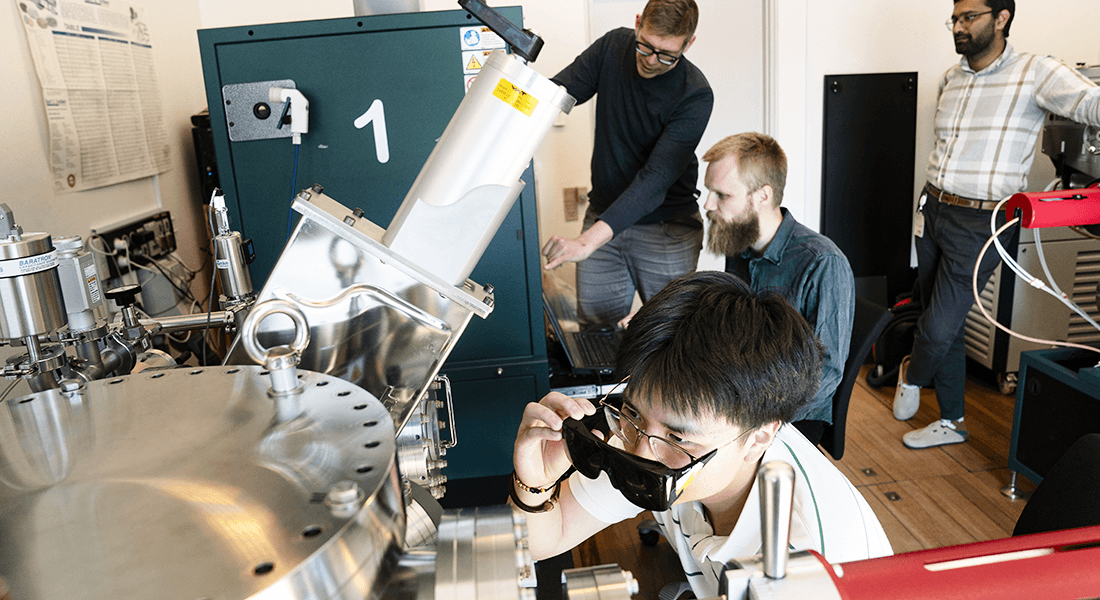
From muscle health and cancer diagnostics to design principles for urban spaces, sustainable wood treatment, quantum sensing, chip technology, and precision agriculture.
So far in 2026, the University of Copenhagen (UCPH) has supported eight spinouts, with more on the way. They are built on both patentable technologies and research-based know-how, demonstrating how ideas developed at UCPH can be further advanced into companies with the potential for application beyond the university.
With eight new spinouts to date, UCPH has surpassed the strong result from 2025, when seven spinouts emerged from the university.
"Research is the foundation of everything we do, and our excellent research creates even greater value when it is put into practice and leads to new solutions and technologies that address concrete societal challenges," says Eva Hoffmann, Vice-Rector for Research and Innovation at UCPH, and continues:
"It is therefore encouraging to see how more of our talented researchers and entrepreneurs at UCPH are transforming new ideas, research findings, and know-how into companies with the potential to make a real difference. These eight spinouts demonstrate both the quality and the breadth of the innovation emerging from the university."
The eight spinouts
Hercu focuses on an area receiving increasing attention in drug development: muscle health. Its specialised analyses help document how treatments affect muscle mass and muscle function. This is particularly important in areas such as obesity, ageing, and cancer, where loss of muscle mass can have serious consequences.
RadPoly addresses another key challenge. Many pharmaceuticals target proteins that are difficult to study outside the human body. By producing specialised polymers, RadPoly enables researchers to study these proteins in a way that more closely reflects their natural behaviour. RadPoly is a joint spinout company from UCPH and the Technical University of Denmark.
Magnolia Quantum Sensing develops sensor technologies based on quantum physics that, in the longer term, can be used for highly precise measurement and monitoring across a range of sectors.
Noktura is developing an open platform for computer vision and AI in agriculture. The aim is to make it easier for farmers, researchers, and companies to share image data, train AI models, and reuse hardware, software, and datasets across projects.
FabCue supports the development of next-generation semiconductor, quantum, and electronics technologies by making advanced chip development faster and more accessible to companies and research environments. The company contributes to a growing ecosystem in Copenhagen and internationally.
Phi Diagnostics develops non-invasive cancer diagnostic solutions based on circular DNA. The technology aims to detect pancreatic cancer as well as other forms of cancer at an early stage through a simple blood test, providing clinicians with diagnostic information earlier in the patient pathway.
Sustaining Publics Ethnographic Studio connects visions of the future with people's lived experiences in cities and urban spaces. The company translates research on human behaviour and experiences into design principles targeted at architects, urban planners, and public institutions.
LignoSolve addresses a significant sustainability challenge within the construction and timber industries by extending the lifespan of locally sourced wood through a lignin-based wood treatment. The technology utilises a by-product from the paper industry as a bio-based alternative to traditional chemical wood preservatives.
From research to societal impact
Spinout companies play an important role in the university’s innovation efforts by translating research results into products, technologies, methods and services that can create jobs, attract investment and contribute to solutions for some of society’s greatest challenges.
“FabCue will strengthen access to flexible prototype fabrication. In our company, we leverage local cleanroom infrastructure to bridge the gap between research and industry, helping customers around the world transform advanced ideas into functional prototypes,” says Saulius Vaitiekenas, co-founder and Associate Professor at the Niels Bohr Institute.
“We have developed an open ecosystem for artificial intelligence in agriculture that will make precision farming more accessible and sustainable. Our solution is a cost-effective open-source system that identifies weeds in real time and enables targeted spraying using existing field equipment,” says Guy Coleman, co-founder and Postdoctoral Researcher at the Department of Plant and Environmental Sciences.
Contact
UCPH Innovation and Business Collaboration
External Collaboration and Management Support
Nørregade 10
1165 København K
DIR 41 90 41 24
lar@adm.ku.dk