
A container on Funen aims to make the world a little less warm
From a barn in northern Funen, Professor Matthew Johnson is testing a technology that rapidly breaks down the climate-damaging methane produced by cows – and which could be found in most Danish cattle barns within a few years.
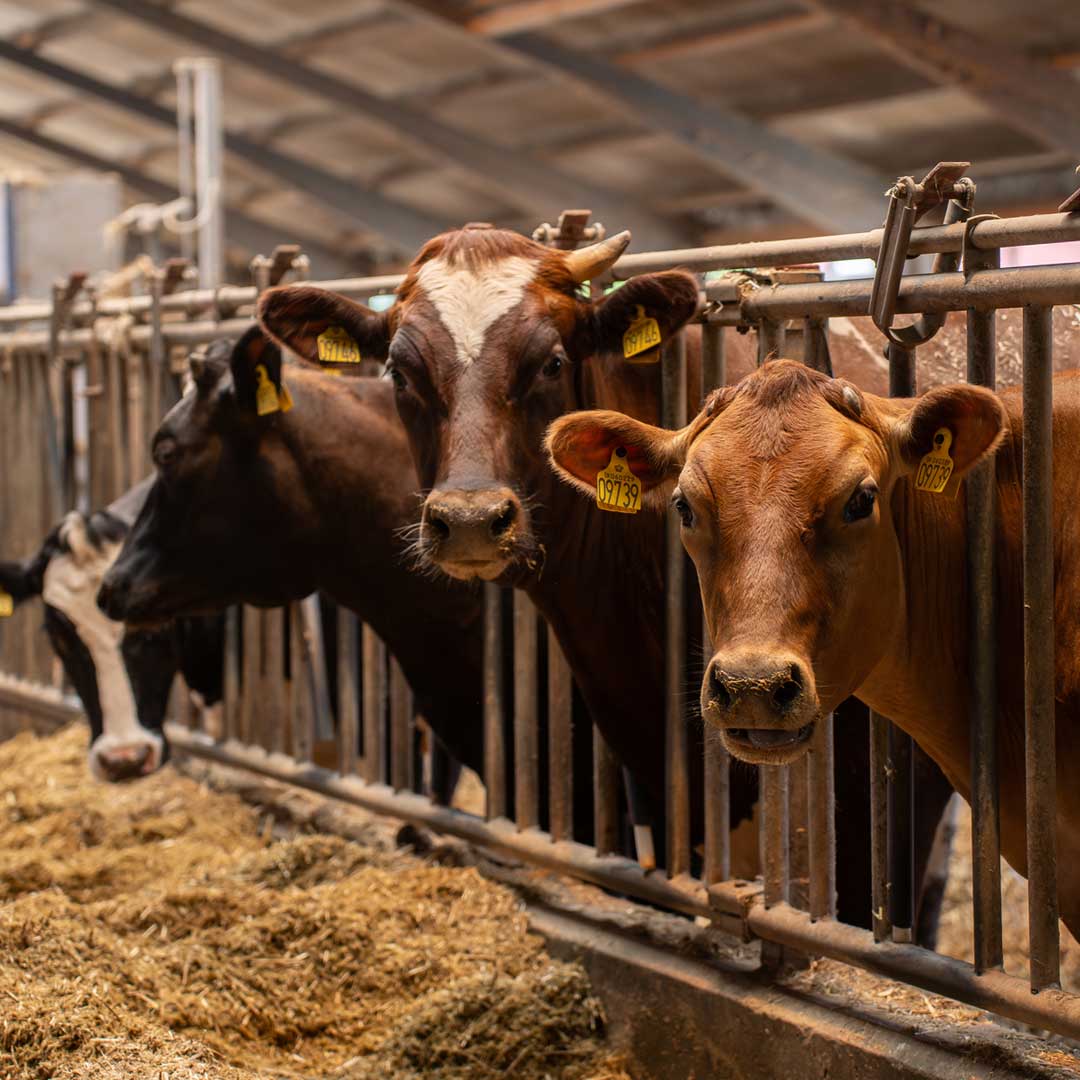
The cows' large brown eyes lazily follow Professor of Atmospheric Chemistry Matthew Johnson as he inspects the gray box under the ceiling from the barn floor. For a while, he has swapped his office at the Department of Chemistry in Copenhagen for the Hofmansgave estate in northern Funen – a beautiful, historic place surrounded by sea, fields, straw, and cow dung. And not least: cows.
The four-legged giants, which we have kept as livestock for thousands of years for their nutritious milk and meat, are also the reason why the professor is standing here among the animals. Because the price of spaghetti with meat sauce, cheese on bread, and milk in coffee is not just dollars and cents. It is also invisible, odorless, and disastrous for the climate.
Methane cannot be seen. It has no smell. Yet it is one of the planet's worst climate villains. The gas is over 80 times more effective than CO₂ at warming the Earth. And cows—through their digestion—are among the largest producers of methane on the planet. Cattle barns, biogas plants, and sewage treatment plants emit enormous amounts every year, quietly but surely contributing to global warming.
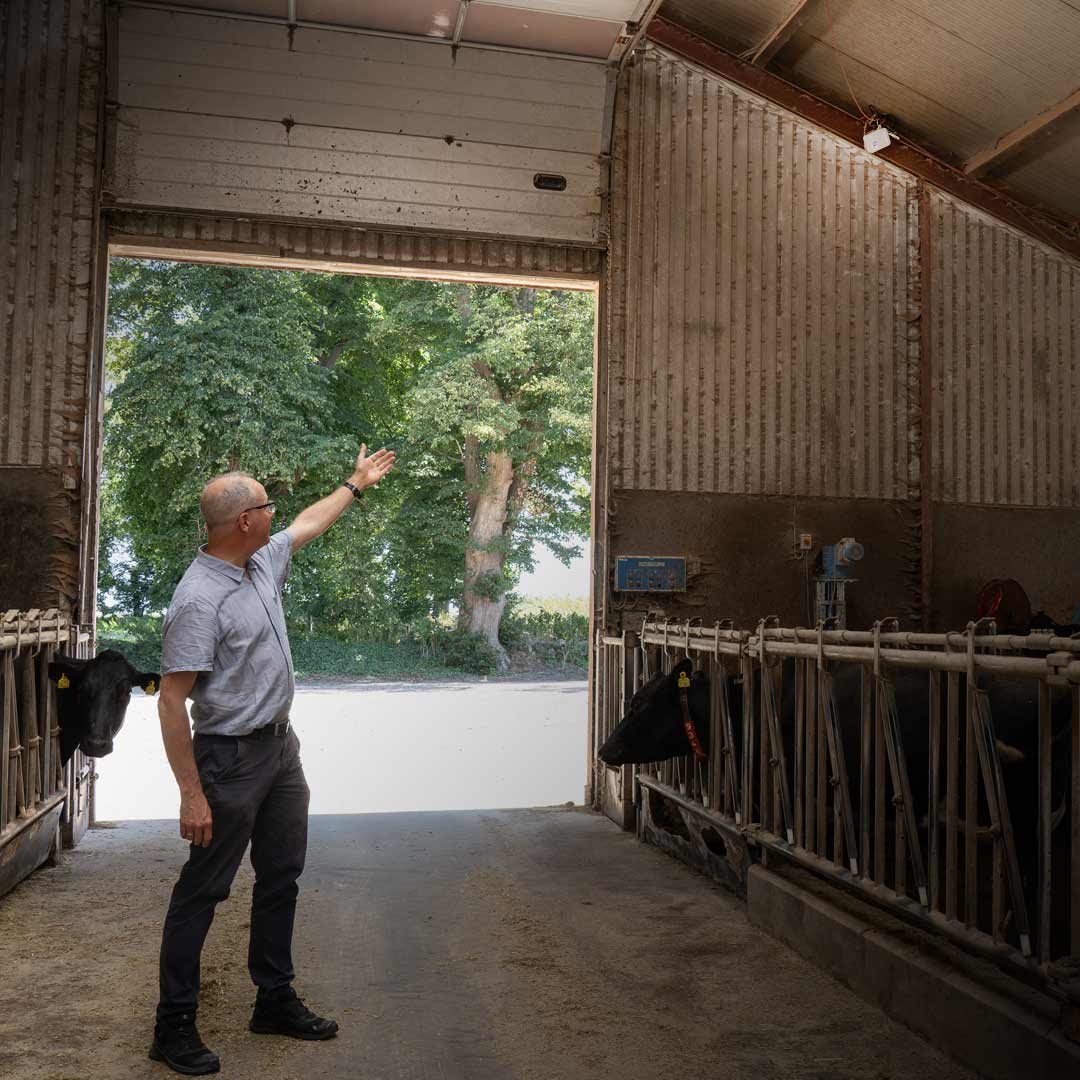
But Matthew Johnson has found part of the solution. And this is where the gray box comes into the picture, along with a green 40-foot container and a new technology that could become an important part of the global climate equation.
Breaks down methane at hyper speed
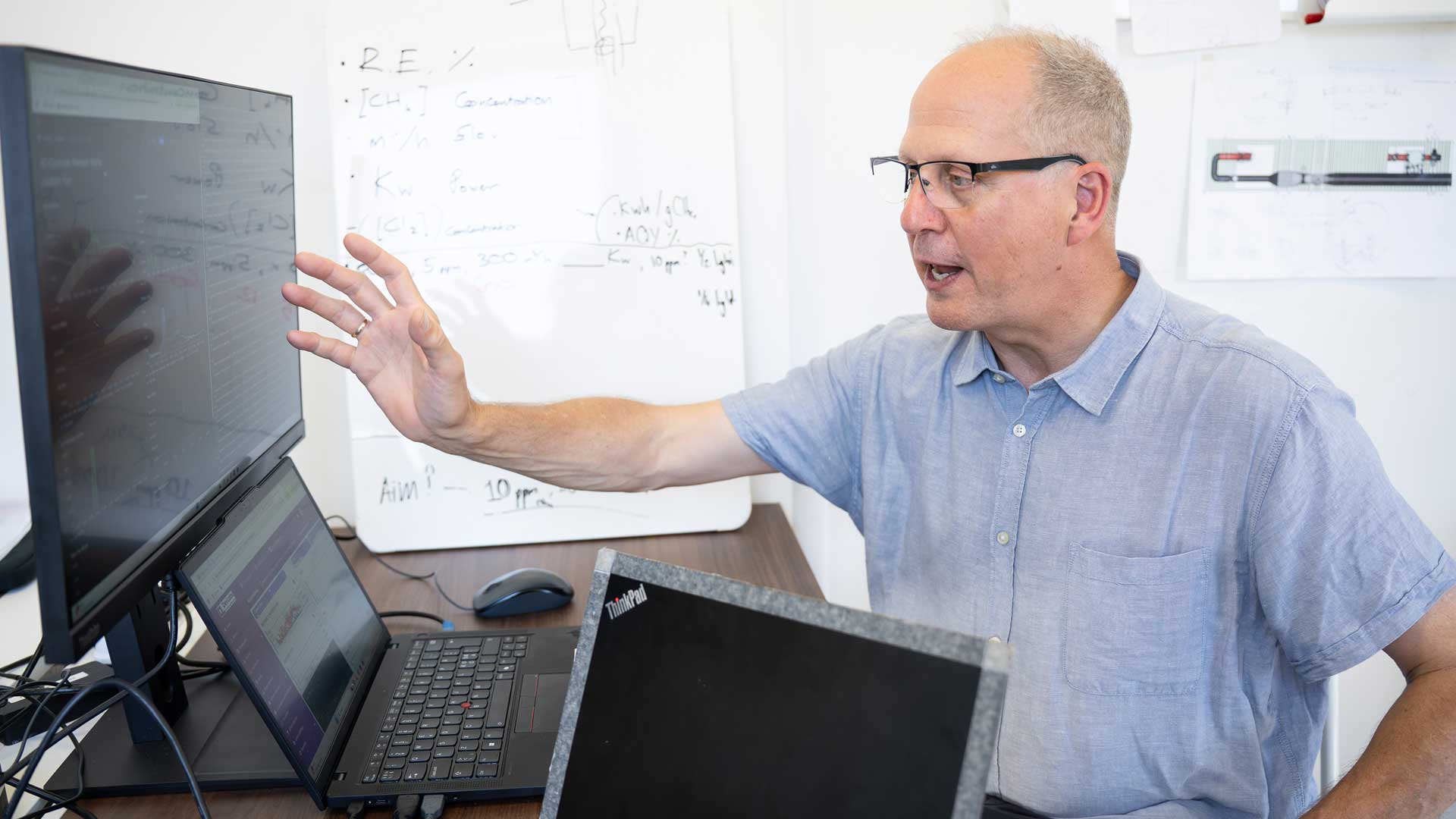
“This is the control center,” says Matthew Johnson, gesturing with his arm.
He is sitting on a chair in a small temporary office in a shed next to the 12-meter-long green container outside the barn. On the computer screen in front of him, a graph moves up and down in rhythmic waves before suddenly plummeting toward zero.
“Here we can see the methane from the cows,” he explains, pointing to the curve. “Right there, it disappears. Down to nothing.”

It looks like magic. But it's chemistry.
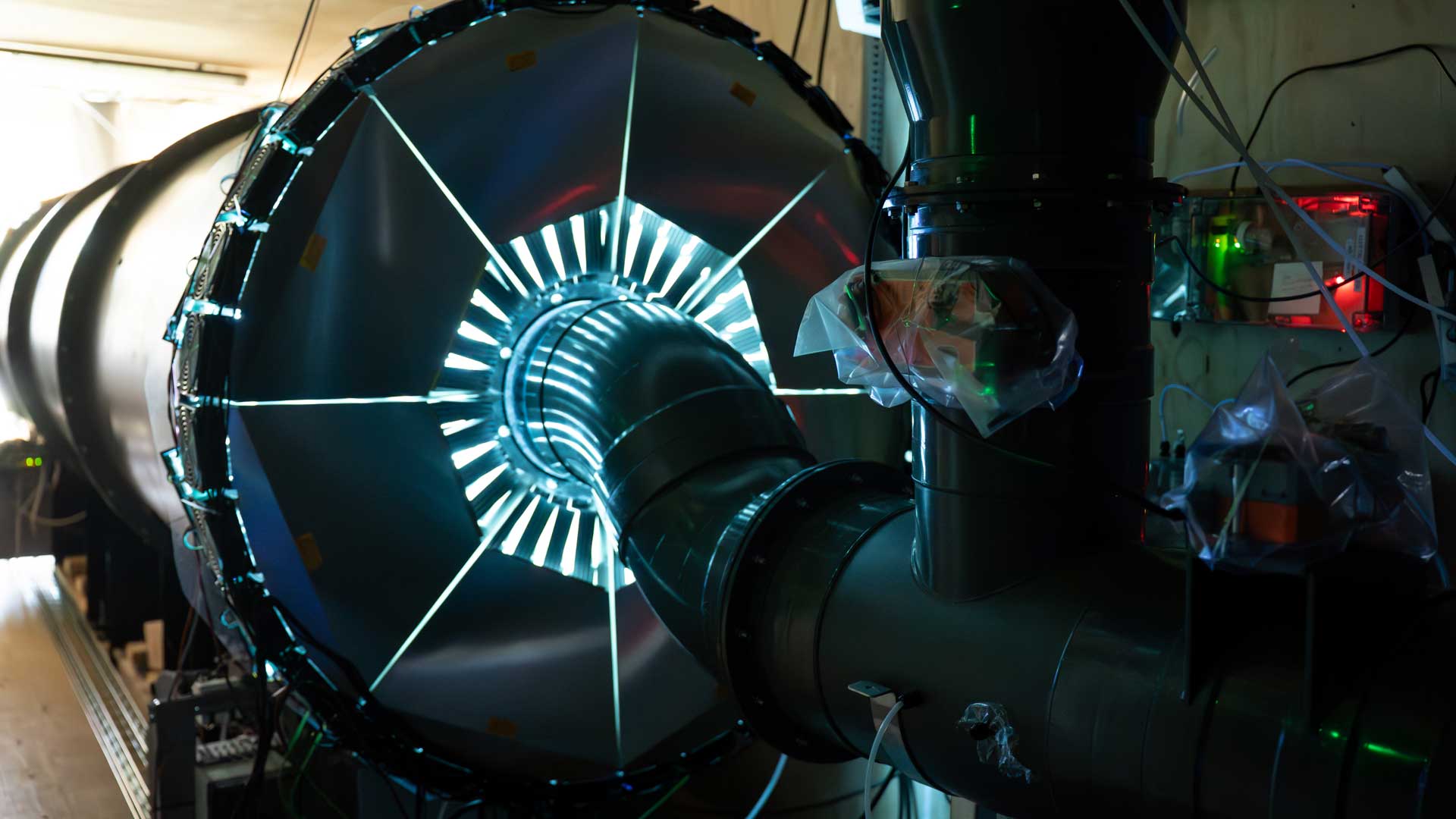
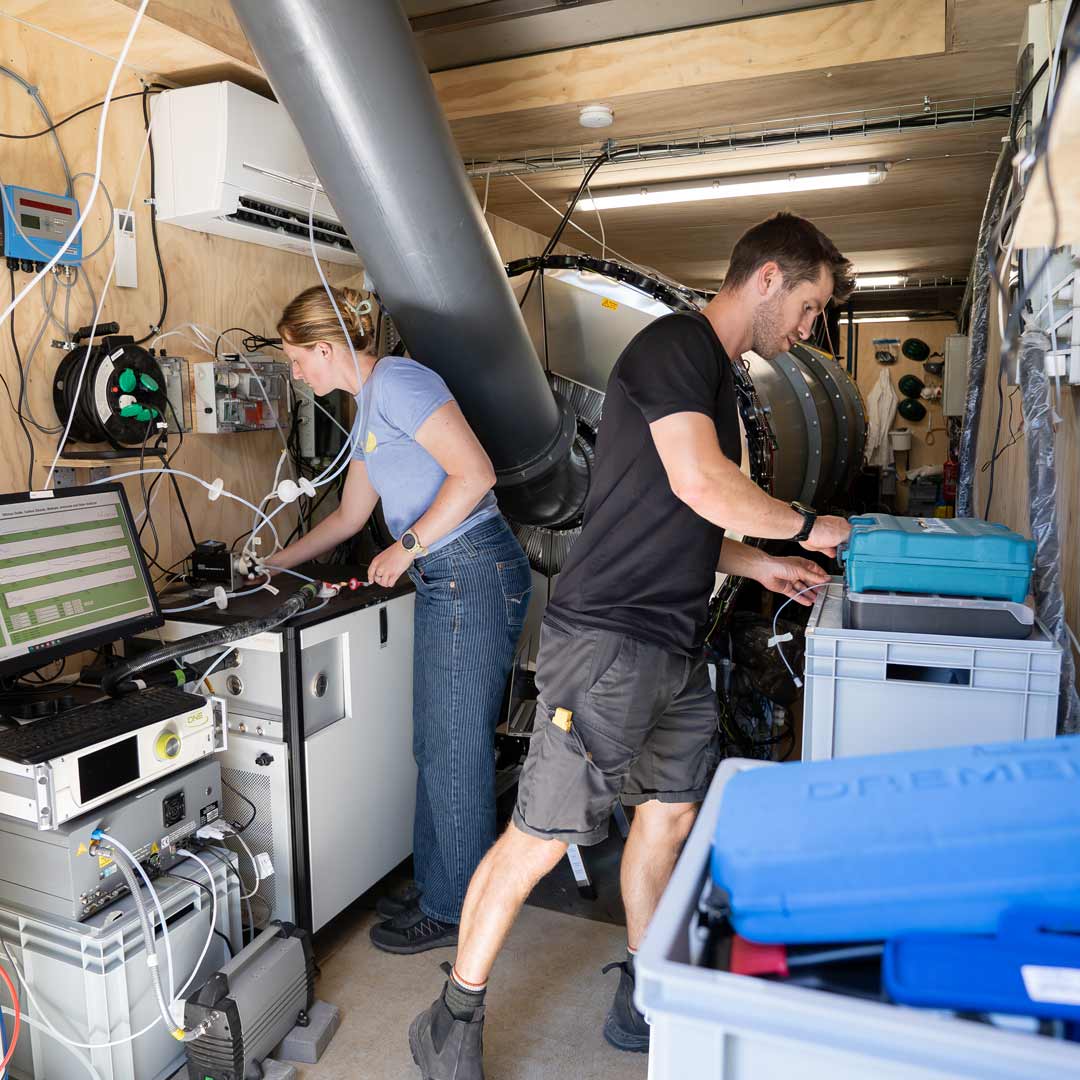
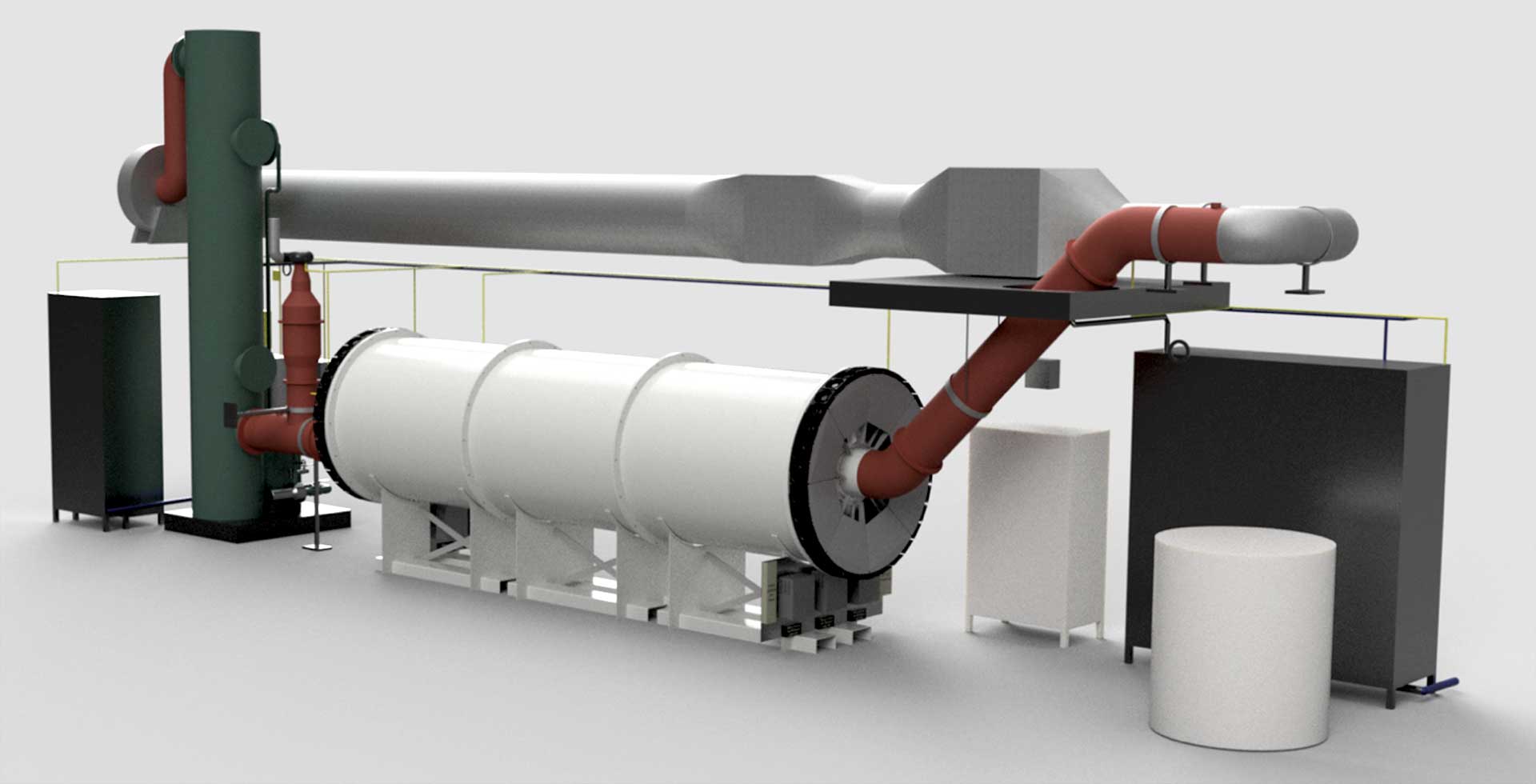
In the container next door, in a three-meter-long cylindrical reactor that emits a powerful, bright blue glow and looks like something from a Star Wars spaceship in hyper speed, the miracle itself takes place.
The reactor is connected directly to a giant vacuum cleaner in the roof of the barn, which tirelessly sucks up the cows' methane-filled burps and farts. Inside the reactor, the researchers send chlorine molecules in along with the methane gas.
When they illuminate the chlorine molecules with UV light, they split into two chlorine atoms, which immediately react with the methane: they steal a hydrogen atom, and the methane molecule falls apart. What remains is carbon dioxide, carbon monoxide, and hydrogen—just like in nature, but in the reactor, the process happens instantly.
“We have basically put nature's own chemistry on steroids,” says Matthew Johnson with a smile.
The method is called MEPS – Methane Eradication Photochemical System – and it is up to 100 million times faster than natural decomposition in the atmosphere.
Interest from Denmark's largest milk producer
The first prototype of the methane purifier was born in a glass cage at the Department of Chemistry back in 2023. At that time, the reactor was the size of a microwave oven on a laboratory table, and Matthew Johnson could only purify very small amounts of methane at a time. The results were published in the journal Environmental Research Letters and attracted international attention.
At COP28 in Dubai later that year, Johnson spoke via video link to world leaders about the potential. The technology could be part of the answer to how we can break the curve of methane emissions without the world having to give up meat, milk, and cheese from one day to the next.
Since then, Matthew Johnson has co-founded the spinout Ambient Carbon, which has developed a larger, more efficient reactor. The tests at the Hofmansgave estate mark the first step out of the laboratory and into reality – and the results look very promising.
Dairy giant Arla, which accounts for 90 percent of Danish milk production, has given positive indications that it will install Matthew Johnson's methane purification system on all its farms by 2027.
But Matthew Johnson sees greater prospects than just Danish cows and barns.
“If we can install these reactors in cattle barns, biogas plants, and sewage treatment plants around the world, we can take a big bite out of methane emissions,” he says. “It's not the only solution to the climate crisis – but it's a solution we can use right now.”
According to the professor, the Green Tripartite has generated considerable interest in the methane purifier because it is planning to introduce a tax on methane in 2030.
Putting knowledge and people to work
For Matthew Johnson, his work as a researcher and inventor began just as the Fogh government came to power in the early 2000s. At that time, Danish universities were given a third mission in addition to research and education, which was to reach out more to society.
Phrases such as “from research to invoice” were coined, and this may have made an impression on Matthew Johnson, who has now founded six companies based on his research at the University of Copenhagen.
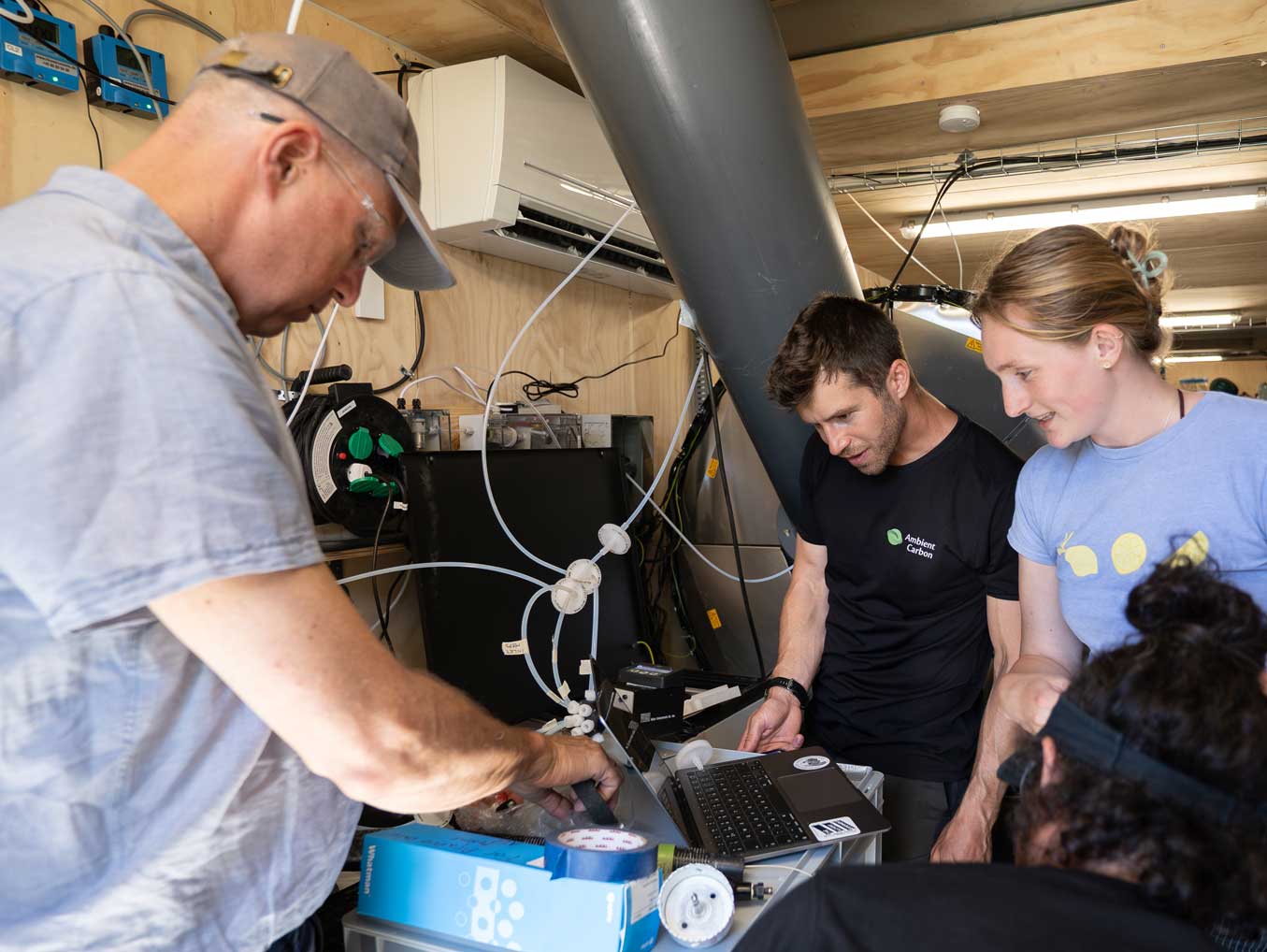
"I see innovation and getting research out of the university as a natural extension of our role. It's a way to put the knowledge and people we have to work and create value for society," says Matthew Johnson.
The professor, who is a recipient of the University of Copenhagen's innovation award, is motivated by helping society, educating young researchers, and inventing new things. At the same time, he thinks there is a lot of hype around transforming research into companies and products, and according to him, there is a big difference between talking about innovation and actually innovating.
“As a researcher, you have a unique and valuable role because, by definition, you are deep tech and innovation. So I would say that as a researcher, you shouldn't worry too much about all the hype surrounding innovation. Let others take care of that side of things and focus on what you do best: solving problems. Innovate!”
About the method
The researchers have built a reactor and invented a method that simulates methane's natural decomposition process in a shorter time. They have named the method “Methane Eradication Photochemical System” (MEPS), which breaks down methane 100 million times faster than in nature. The method works by the researchers sending chlorine molecules into their reactor together with the methane gas. The researchers then shine UV light on the chlorine molecules. The energy from the light causes the molecules to split and form two chlorine atoms. The chlorine atoms then steal a hydrogen atom from the methane, which falls apart and decomposes. The chlorine product (hydrochloric acid) is captured and recycled inside the reactor. The methane is then converted into carbon dioxide (CO2), carbon monoxide (CO), and hydrogen (H2) in the same way as the natural process in the atmosphere.
From research to solution
The reactor is an example of how research at the University of Copenhagen is translated into concrete solutions that can make a difference in the world. UCPH works purposefully with innovation and helps researchers develop new technologies, create spin-off companies, and bring ideas from the laboratory into society.
Read more about how the University of Copenhagen works with innovation and commercialization of research: innovation.ku.dk

Matthew Stanley Johnson
Born: December 14, 1966, Crookston, Minnesota, USA
Title: Professor of Atmospheric Chemistry at the Department of Chemistry, University of Copenhagen
Specialization: Atmospheric chemistry, photochemistry, climate pollution, methane degradation
Education: Bachelor's degree in chemistry, Macalester College, 1989, Ph.D. in physical chemistry, Caltech, 1995
Research: Atmospheric chemistry, reaction kinetics, spectroscopy, 12 patents and over 158 publications. Here is the latest research article on the methane purifier.
Innovation: Founder of cleantech companies such as Ambient Carbon and founder of five additional spinout companies, Infuser, Airlabs, Devlabs, Luper, and Anaeco.
Awards and honors: Recipient of the University of Copenhagen Innovation Award, Danielsen Environment Prize, Distinguished Citizen Award from Macalester College, Fulbright Fellowship.